The Lower Pond — Ancient and Modern Permaculture at Work
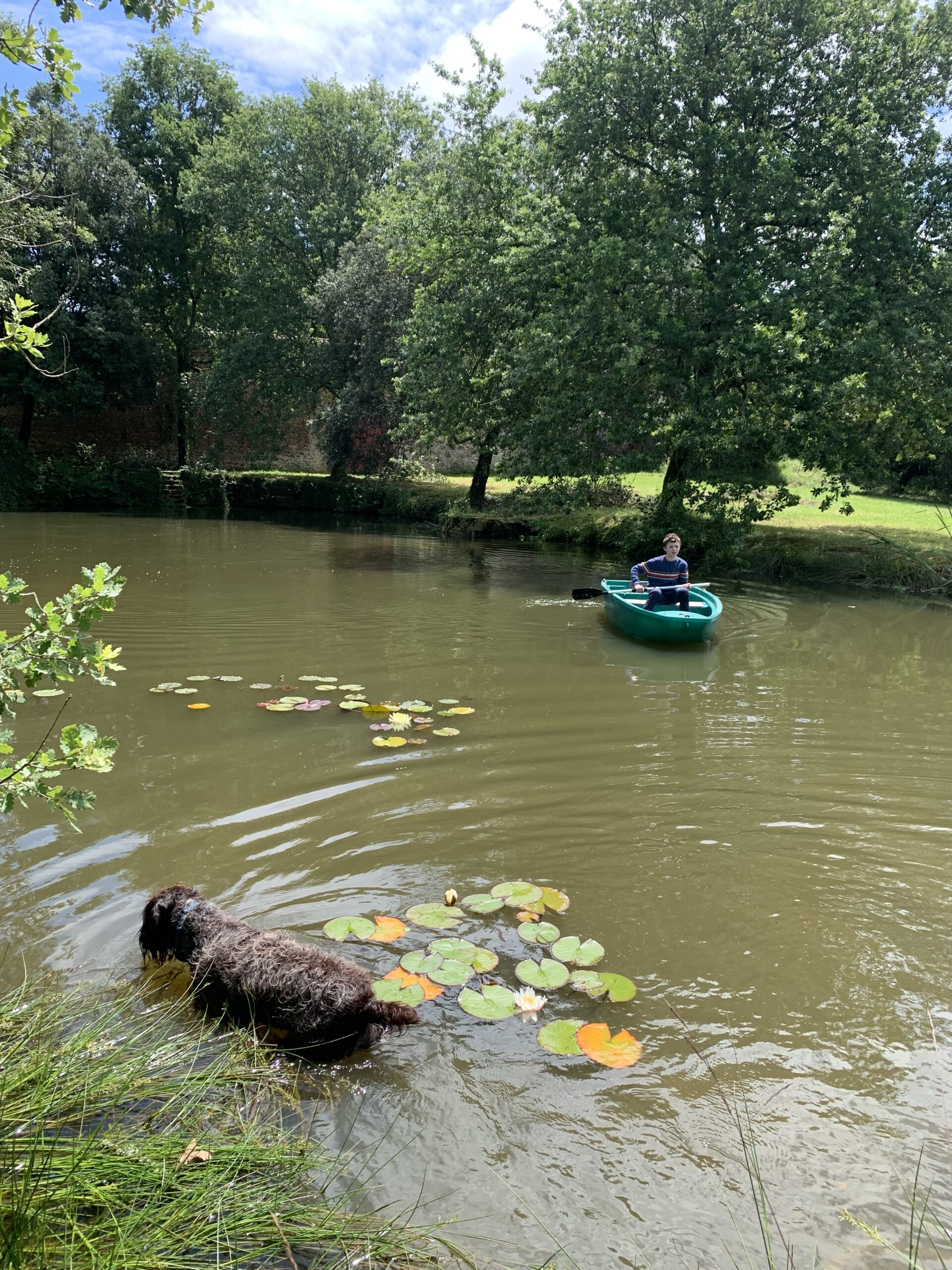
We call our lower pond the Ponyo Pond because it is home to two or more enormous and quite ancient carp. They have lived here longer than any other known resident of the Château and we respect their seniority and revel in their rare appearances. Very occasionally they jump clear out of the water. Other times they sunbathe on the lowest submerged stone steps, and you can even pet them for a moment.
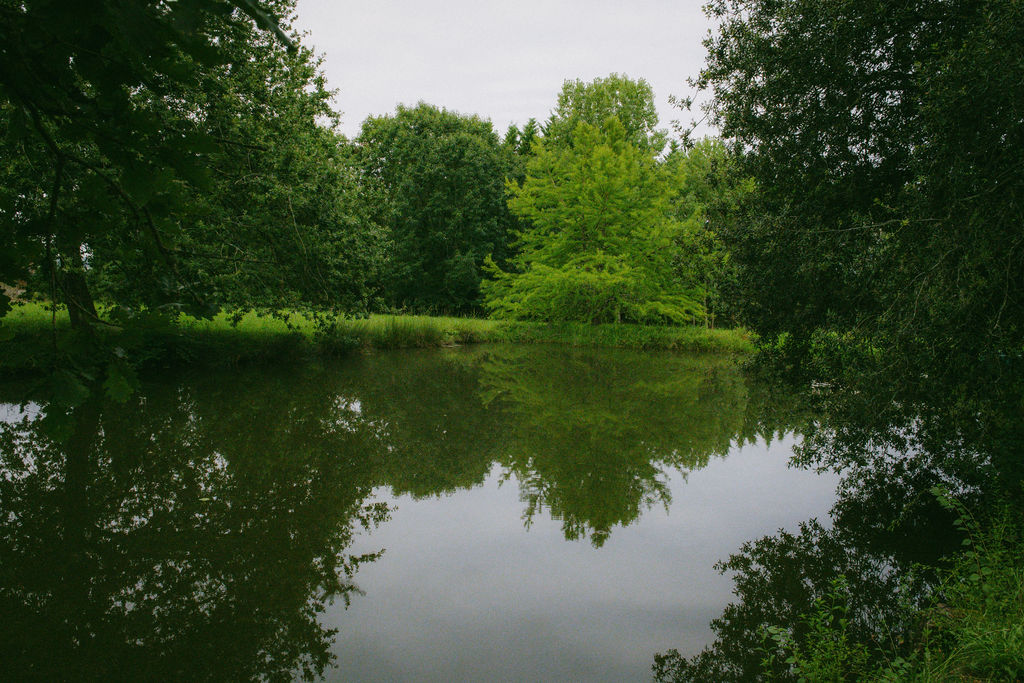
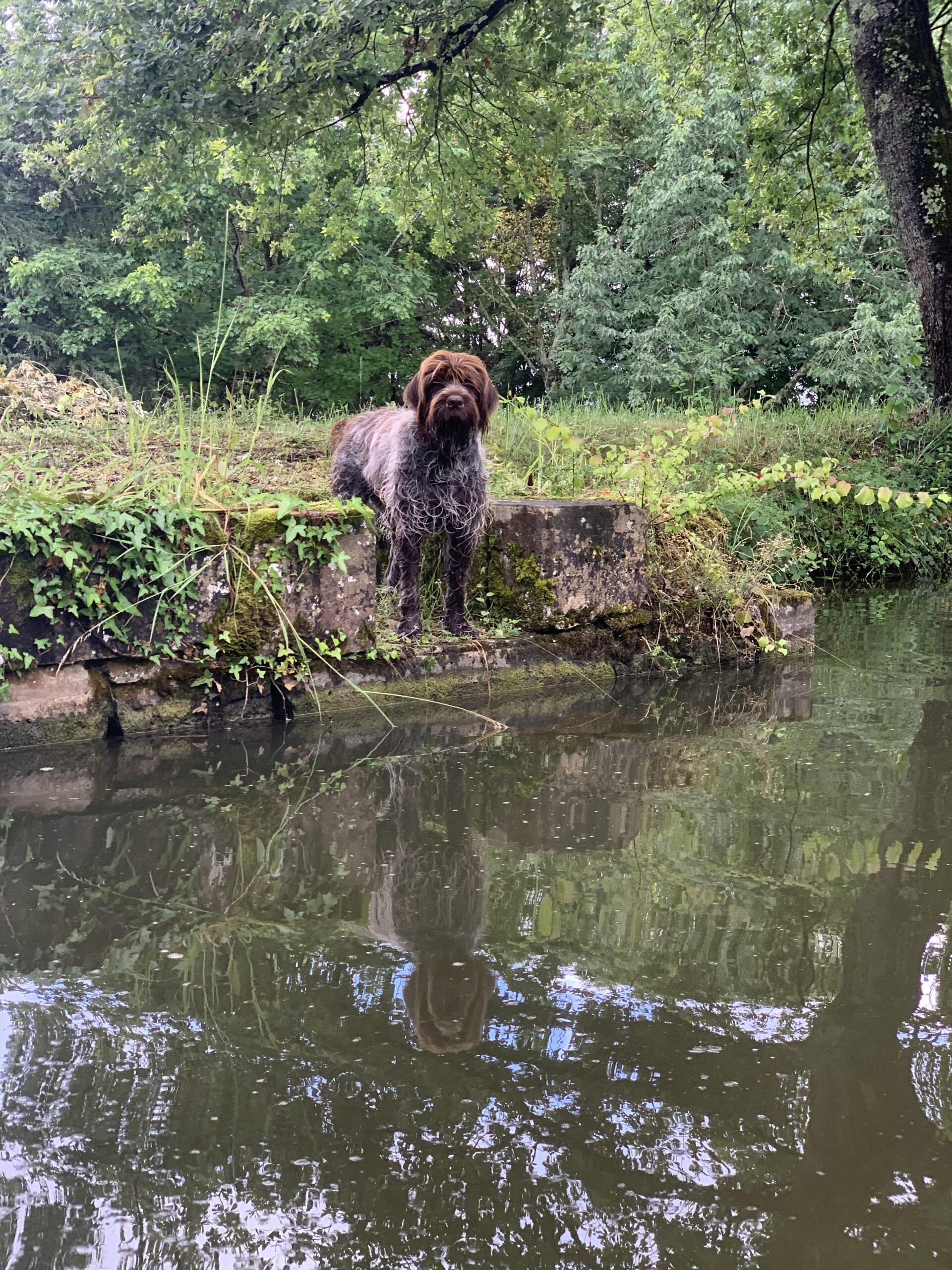
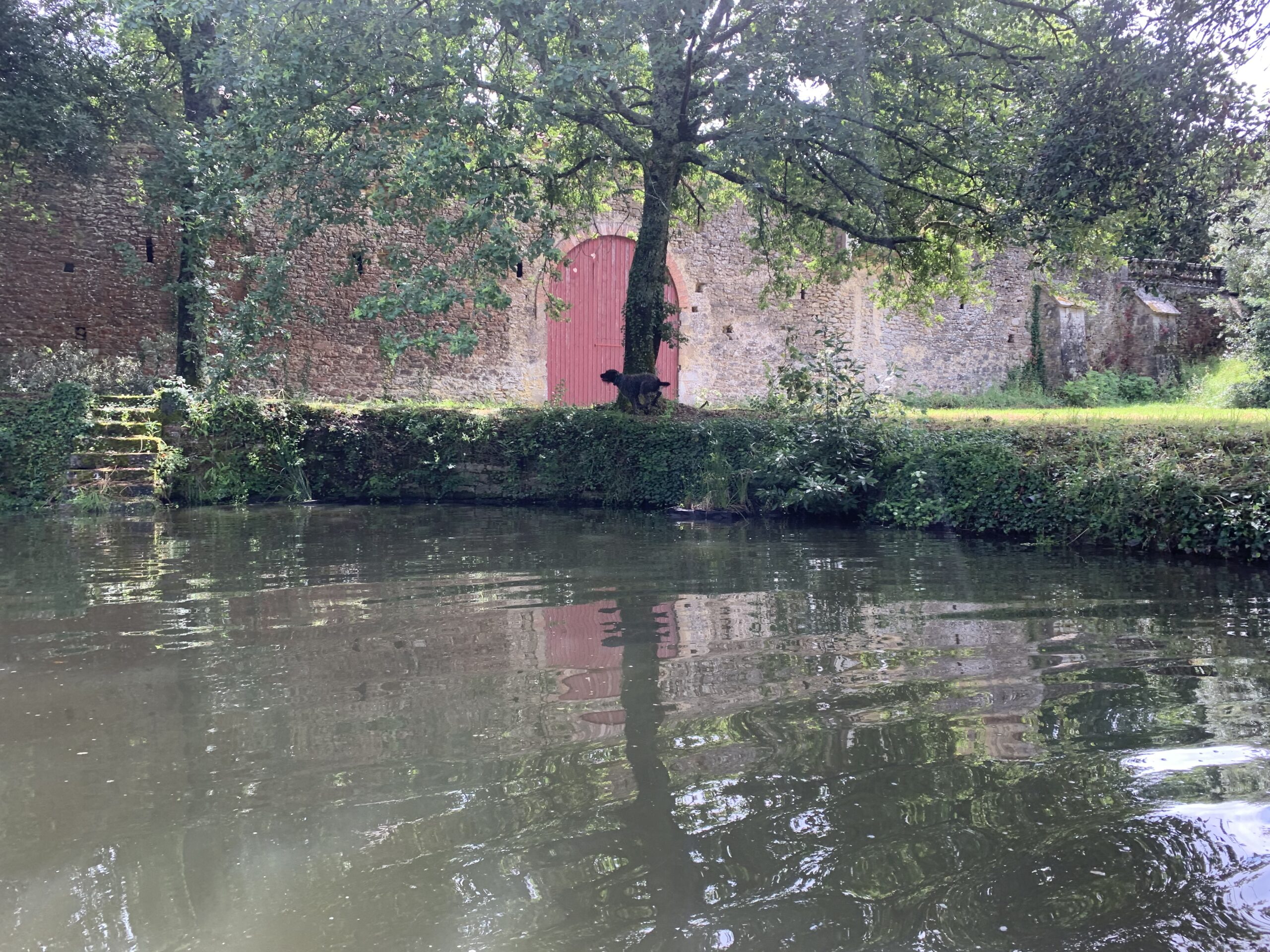
The pond is stone-lined and situated on a fairly steep slope below a medieval (12th-century) stone Armagnac barn. At its upper end the water surface is three or more metres below grade, reached by a lovely set of stone steps. At its lower end, a stone 'beach' submerged at high water would have provided access to cattle — this end forms the dam, about 1.5m above the terrain immediately below it.
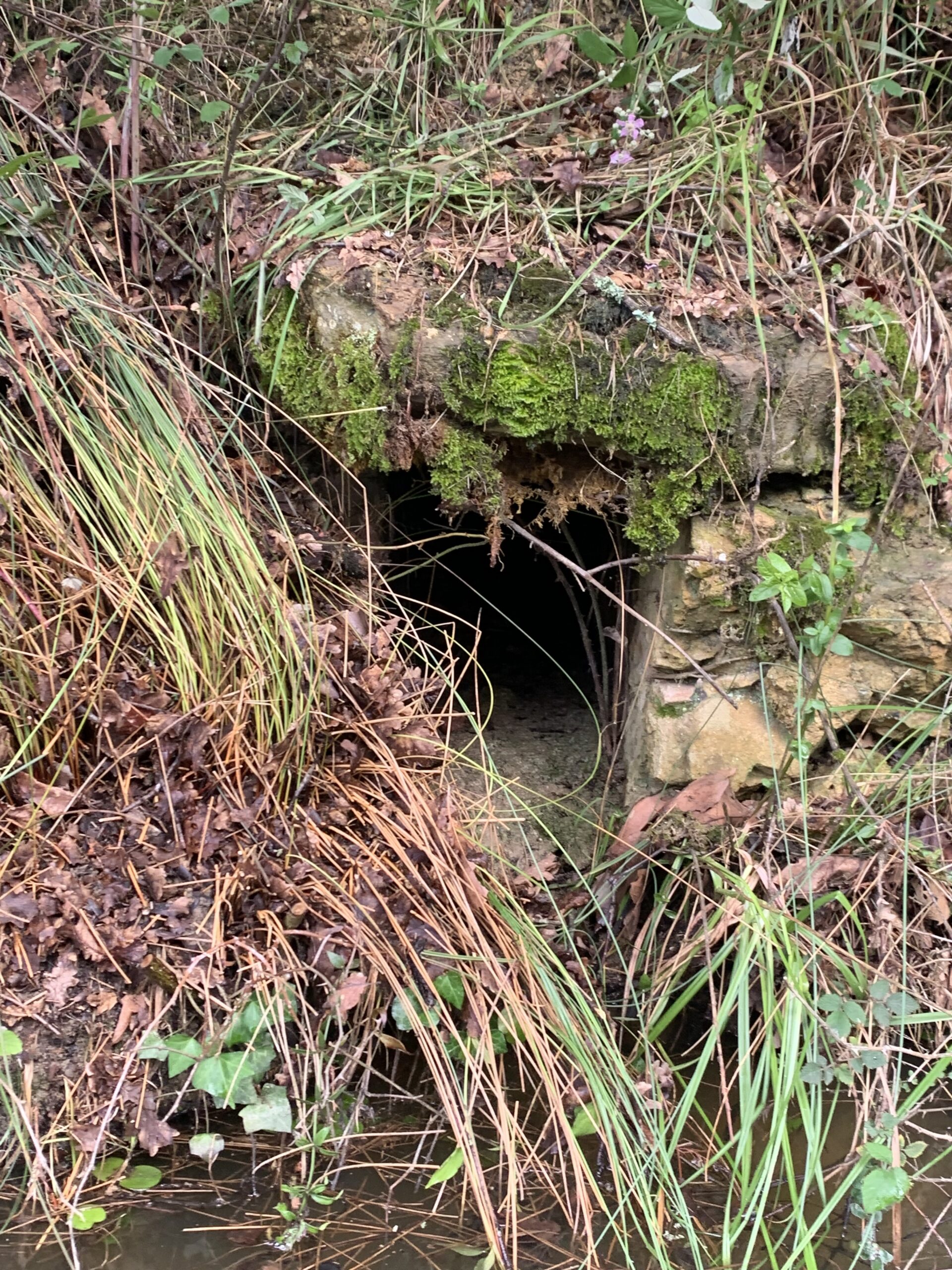
The pond is approximately 50m in length, 22m wide, and 4+ metres deep at its centre. It is home to many hundreds of uncounted carp and small bass. (The carp eat the bass before they get very big.) It is fed by an underground spring and a number of inbound pipes, some in very ancient stone and others in modern plastic.
The Cypress, the Dam and the Willow Walk
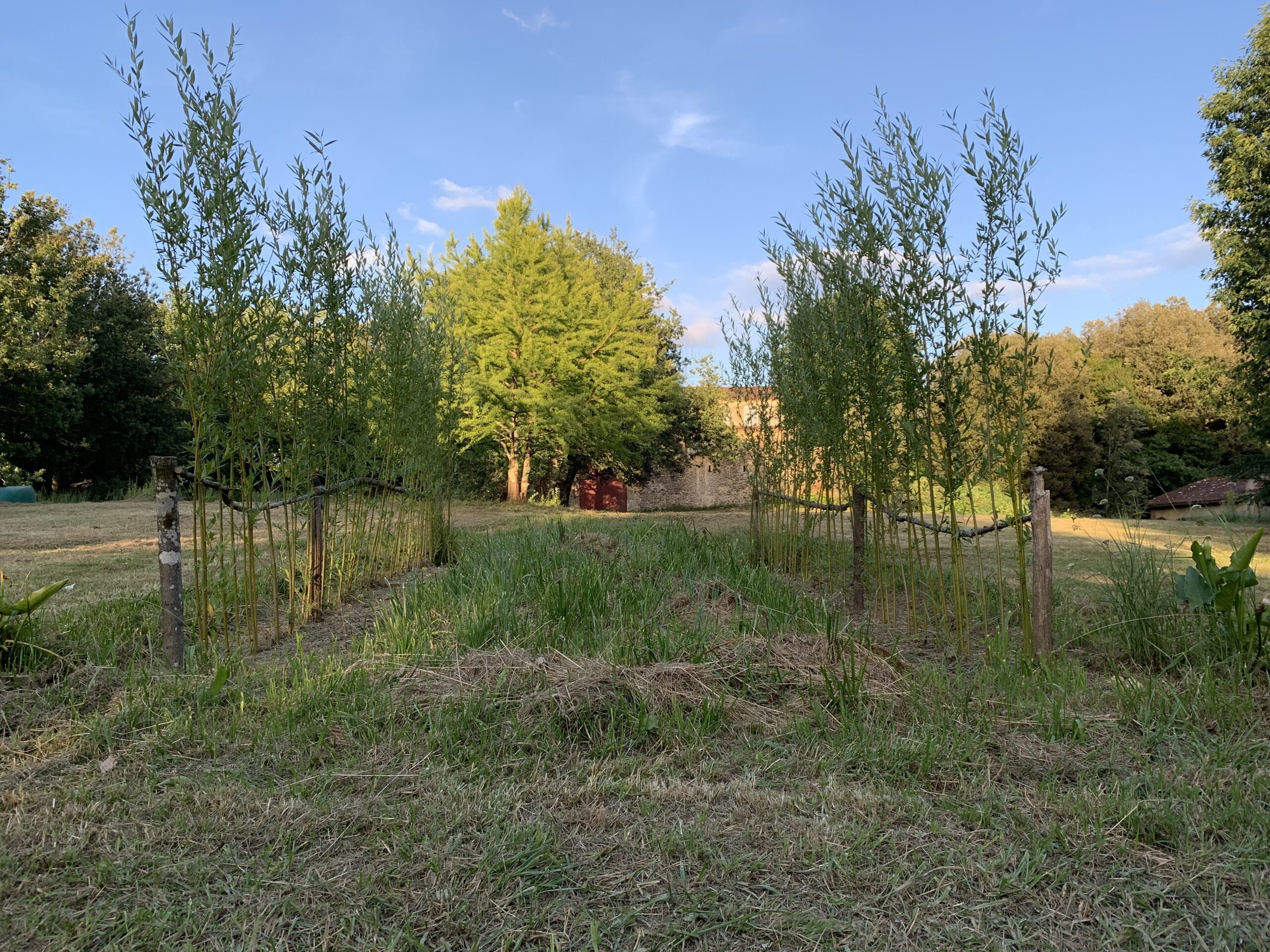
Some time ago, a former owner planted a beautiful swamp cypress on the dam. Of course in doing so they compromised the dam, producing a muddy mess below the pond. The pond remains full, but overflows to the west and seeps through the dam where the tree's roots have perforated it. We have chosen not to remove the cypress, but instead to work with the results of its presence.
We dug swales and planted a willow garden in these marshy grounds — creating a long, elegant willow walk comprising 150 slender willows. Currently about 2 metres tall, we will wait until they are tall enough to braid and for the two sides to be joined to form a pointed arch, creating a shady escape from the summer heat.
Historic Uses, Future Plans
Historically the pond served as a food source, a source of high-nitrogen irrigation water for plants, and a cattle trough. Taking advantage of the nitrogen-rich waters and the nitrogen-fixing willows and poplars that abound here, we are planning future raised growing beds in this area.
To further manage and direct the water toward the beds, we have designed a series of ponds and false streams. A modern trend in aquaponics has also inspired us to create floating islands on the pond — some planted with water-cleaning plants, others with edible crops. This adds visual interest, cleans the water, feeds us, and provides the fish with an additional food source.
The Pond as a Place of Joy
This would not be a complete picture without mentioning the most important output of this pond: we love it. We have a little row boat for splashing about and for necessary weeding of the interior walls. We have a delightful wooden bench for quiet contemplation, and are planning to build a small deck on the remains of an old stone well at its south edge, for lazy lunches.